Seasonal Cleanup Tips for Atlanta Landscapes
Seasonal cleanups in Atlanta’s intown neighborhoods are not a single checklist you run twice a year. Neighborhoods like Buckhead, Chastain Park, Ansley Park, Virginia Highlands, Midtown, Brookhaven, and Sandy Springs sit under mature mixed canopy that drops leaves in waves, not all at once. That means one fall visit often leaves lawns and beds covered again within weeks. Beyond timing, local disposal rules in Brookhaven, Sandy Springs, and Atlanta restrict where debris can go and require contractors to handle haul-off differently than homeowners. Healthy shredded leaves can go back into beds as mulch, but diseased plant material should leave the property entirely to avoid reinfecting beds the following spring. Spring pruning carries its own timing rules: azaleas and other spring bloomers should be pruned after they flower, not during a generic winter cleanup. Getting the sequence right, debris removal, selective pruning, bed edging, then mulch after soil warming, is what separates a cleanup that helps the landscape from one that costs you flowers or money.
What Seasonal Cleanups Actually Mean in North Atlanta Landscapes
A seasonal cleanup is timed maintenance work, and the timing is not the same for every property or every season. Older intown neighborhoods with large oaks, sweetgums, and mixed deciduous canopy create very different cleanup demands than newer subdivisions with younger, thinner tree cover. The right plan depends on what is on the property, what time of year it is, and what the plants need next.
In established areas like Ansley Park, Chastain Park, and Virginia Highlands, a fall cleanup that wraps up in late October may leave a lawn buried under a second wave of leaves by December. A spring cleanup that shears every shrub in sight can strip out an entire season of azalea blooms. Cleanup work that ignores plant timing is cleanup work that creates new problems.
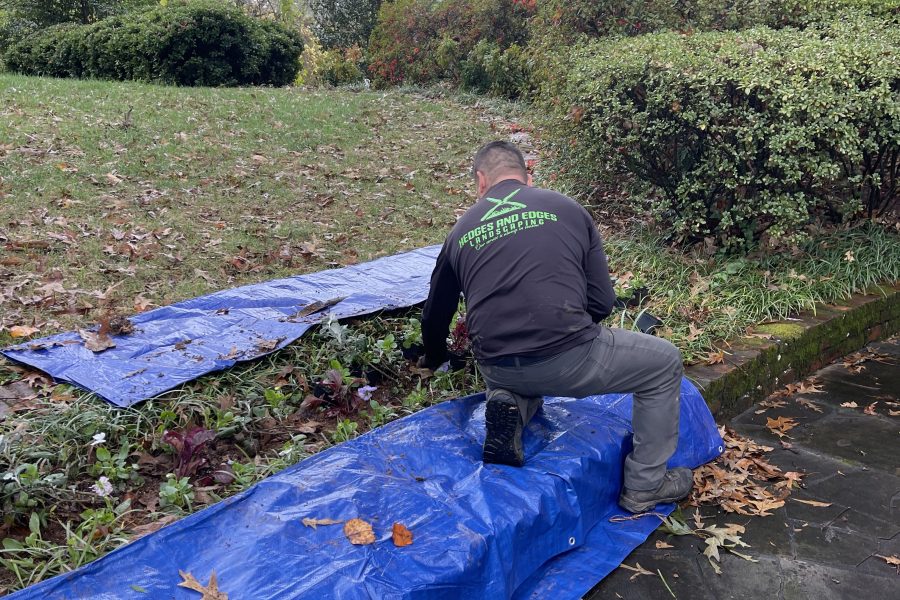
Why Fall Cleanup Is Rarely One Visit on Leaf-Heavy Properties
Mature canopy neighborhoods like Buckhead and Sandy Springs have trees that operate on different drop schedules. Maples and dogwoods tend to shed early. Oaks, especially willow oaks common throughout Brookhaven and Midtown, hold their leaves much later and can still be dropping heavily into December. One cleanup pass taken in mid-November can look complete within a week if the oaks have not finished yet.
Staggered cleanup visits make more practical sense on properties with high canopy density. A first pass handles the early droppers, clears beds and turf before debris packs down, and prevents the smothering effect that heavy leaf mats have on warm-season grass transitioning into winter dormancy. A follow-up visit after the late trees finish is usually more efficient than one oversized single-day effort that still leaves crews working ahead of the last leaves.
Hardscape areas, patios, walkways, and driveways also collect debris differently than turf and planting beds. A follow-up visit can address surfaces that were clear during the first visit but have since accumulated another round of leaf pack and organic debris.
Local Disposal Rules That Affect How the Work Gets Done
Debris handling is where many cleanups cut corners, and in North Atlanta municipalities, the rules are specific enough to matter. In Brookhaven, the city explicitly warns residents and contractors not to blow leaves or yard debris into storm drains or streets because clogged drains can cause neighborhood flooding. Leaves need to be bagged for pickup according to DeKalb sanitation procedures, not pushed to the curb as loose piles.
Sandy Springs follows similar guidance. Sandy Springs code guidance says leaves should not be swept into drainage ditches or drainage structures. The recommended options are curbside bagging or on-site composting, not blowing into the street.
For properties inside the City of Atlanta service area, yard trimmings must be separated from solid waste and placed at least six feet away from bulk items. Importantly, contractors and landscaping crews must haul yard trimmings off as contractor-generated debris rather than setting them out as if they were residential homeowner waste. This affects how cleanup jobs should be scoped and quoted for Atlanta clients in neighborhoods like Midtown, Virginia Highlands, and Ansley Park.
Healthy Leaves Versus Diseased Debris: Not the Same Decision
Treating all leaf litter as waste is a mistake that costs the landscape twice. Healthy leaves shredded with a mower or leaf shredder can go back into planting beds as a useful mulch layer. UGA Cooperative Extension guidance notes that whole unshredded leaves tend to blow around and do not stay in place well, but shredded material layered under bark or pine straw is a different story.
The exception is debris from plants that showed fungal disease or other disease problems during the growing season. Diseased plant material should always leave the property rather than being worked back into beds. Infected leaf debris can carry fungal spores through winter and contribute to reinfection when spring rains arrive. This is especially relevant in shaded, high-moisture beds common in Buckhead and Chastain Park properties where disease pressure already tends to be elevated.
Pruning Timing Mistakes That Cleanups Frequently Make
One of the most consequential errors a cleanup crew can make is treating shrub pruning as a routine task with no calendar constraints. Azaleas are the clearest example in Atlanta-area landscapes. UGA recommends pruning azaleas after they bloom in spring, and explicitly notes that pruning after mid-July reduces the following spring’s flower display because flower buds are already forming on the new growth. Shearing an azalea during a fall or winter cleanup removes those buds.
Camellias follow similar logic. Severe pruning in late fall or mid-winter can trigger tender new growth that is then damaged by cold snaps, which is a real risk in North Georgia even with mild winters. For overgrown shrubs that genuinely need heavy pruning, UGA guidance points to mid-March as the better window, when spring growth is beginning and frost risk is declining.
Ground covers like liriope and mondo grass are common in intown beds and can be rejuvenated by mowing off damaged foliage before spring growth starts. The timing for this work is before mid-February in North Georgia, using the mower at the highest setting to avoid cutting into the crown. Proper Trimming & Pruning requires knowing which plants are on the property before touching a single branch.
The Right Order for Spring Cleanup Work
Sequence matters in spring because doing steps out of order often means redoing work. The first step is debris removal and inspection: clearing winter-accumulated leaves, dead stems, and any mulch that has broken down into the soil surface. During this pass, assess which plant material is diseased and should be removed from the property versus what can be shredded and reused.
Selective pruning comes next, but only for plants where timing is appropriate. Spring-blooming shrubs should wait until after they flower unless there is a structural problem that requires earlier attention. After pruning, the beds should be edged and weeds pulled before any new material goes down.
Mulch or pine straw installation is the last step, not the first. UGA guidance notes that spring mulch is most effective when applied after the soil has warmed and before weeds begin to establish, which means the cleanup and bed preparation have to happen first. Applying mulch over debris or on top of unedged beds just buries problems.
What Actually Drives Cleanup Cost
Cleanup pricing on intown Atlanta properties is driven more by debris volume and scope complexity than by ZIP code. The variables that raise cost the most are tree canopy density, number of return visits needed, and whether haul-off is included or the crew mulches material on site. Properties in Buckhead or Chastain Park with dense oak canopy and multiple planting beds will take significantly more labor than a smaller low-canopy lot in the same general area.
Add-on services like bed edging, landscape bed weed control, and fresh mulch installation are legitimate scope expansions that change the job significantly. Understanding what is in the cleanup scope upfront, including how debris will be handled and how many visits are included, is the clearest way to compare proposals accurately.
Schedule Your Seasonal Cleanup with Hedges and Edges Today
Hedges and Edges handles Fall Cleanup and Spring Cleanup for properties across Buckhead, Brookhaven, Sandy Springs, Chastain Park, Ansley Park, Midtown, Virginia Highlands, and surrounding areas in Georgia. We plan cleanup work around plant timing, local disposal rules, and the actual canopy load on your property, so the work holds up and does not create new problems downstream. If your property needs staged fall visits, a properly sequenced spring refresh, or both, call us to talk through what your lot actually needs. Reach out at (404) 747-6673 and we will put together a plan that fits your property and your season.

