Landscape Installation Guide for Atlanta Intown Properties
Landscape installation in Atlanta’s intown neighborhoods involves a lot more than choosing plants and placing mulch. On wooded lots in Buckhead, Brookhaven, Sandy Springs, Chastain Park, Ansley Park, Midtown, and Virginia Highlands, successful projects depend on getting site evaluation, tree compliance, drainage correction, and soil prep right before any finish material goes in. Mature tree canopy limits turf options and equipment access. Red clay creates drainage and compaction problems that aren’t visible from the surface. Tree protection rules in the City of Atlanta, Brookhaven, and Sandy Springs can affect removals, grading paths, and root zones before a shovel breaks ground. This article covers the practical constraints that shape landscape installation on intown Atlanta lots, including how to choose between sod, planting beds, and groundcover based on actual sun exposure, and the installation sequence that prevents costly rework.
What Installation Really Involves on Atlanta Intown Lots
More Than Plant Selection
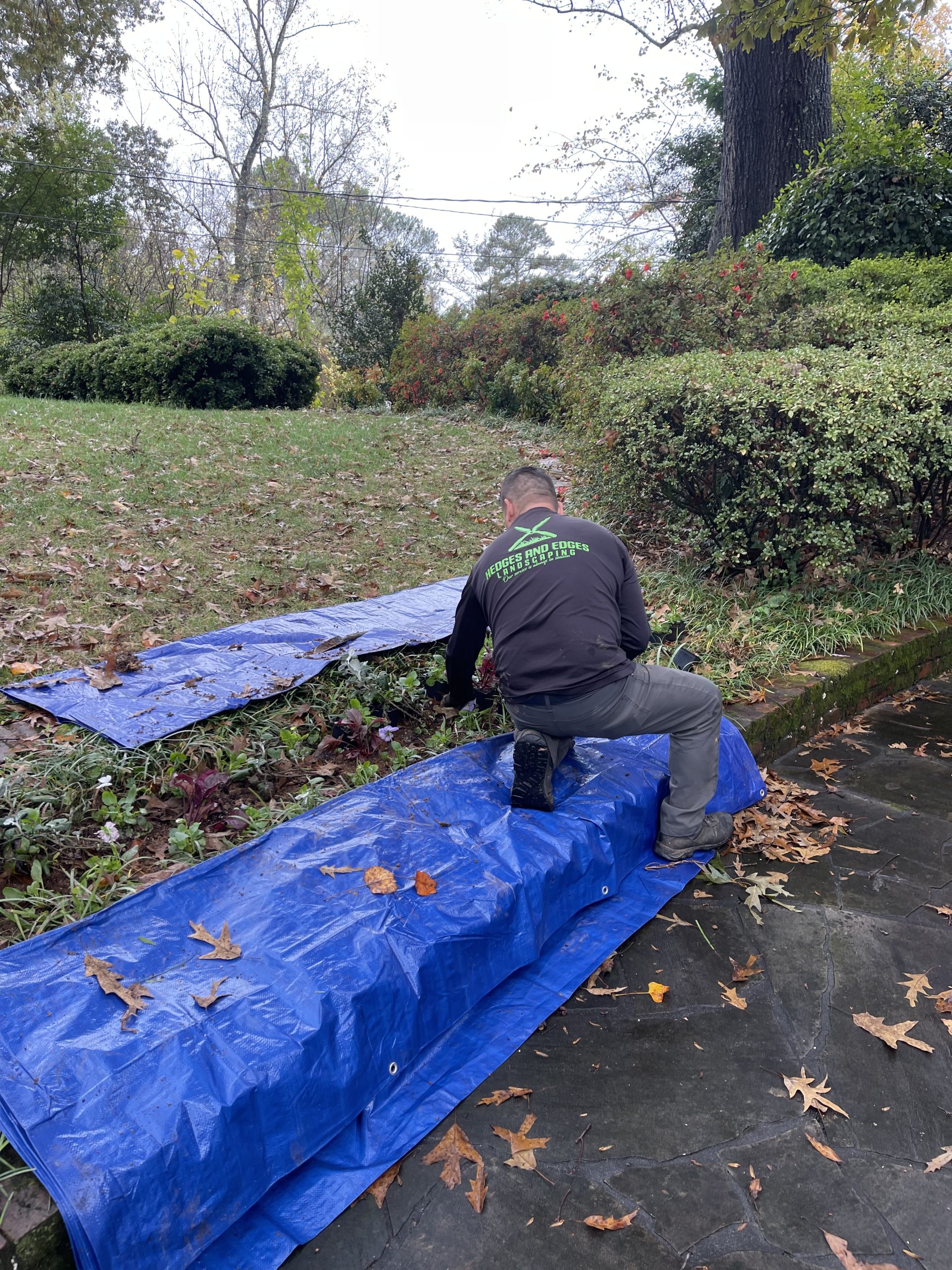
Landscape installation is a design-build process that ends with plants, sod, and mulch but starts well before any of those materials arrive. On an established intown lot, the real work often involves evaluating drainage patterns, identifying tree root zones, correcting soil compaction, and checking local permit requirements. Skipping those steps doesn’t save time. It usually creates rework after the finish work has already been installed.
Mature canopy, red clay, and permit triggers are the three factors that most consistently determine whether an installation goes smoothly or runs into problems on properties in Buckhead, Virginia Highlands, and Ansley Park. Understanding each one before the project starts is what separates a durable result from one that struggles in year two.
Why Tree Rules Differ From Buckhead to Sandy Springs to Brookhaven
Tree protection rules in this part of metro Atlanta are hyperlocal, and they affect landscape installation in ways most homeowners don’t anticipate. In the City of Atlanta, which covers Buckhead, Midtown, Ansley Park, Virginia Highlands, and Chastain Park, any permit application involving potential tree impact requires a formal arborist meeting before submission. Grading, patios, plantings near root zones, and related installation work can all trigger that review if tree removals or root disturbance are involved.
In Sandy Springs, a tree removal permit is required for any tree 18 inches DBH or larger, and any dogwood or redbud at 10 inches DBH or larger. If removal is tied to construction work like grading or patio installation, the city requires a full Tree Conservation Plan rather than a simple removal permit. In Brookhaven, the threshold is lower: all trees 4 inches DBH or larger need a removal permit subject to arborist approval, which means even modest bed expansion on a wooded lot can become a permit question.
These rules don’t block installation, but they do affect the timeline and the access paths crews can use. On tight intown lots, root-zone protection can also limit where equipment travels, which adds labor when larger machines can’t be used efficiently.
Lawn, Planting Beds, or a Mixed Layout: How to Decide
The first real installation decision isn’t which grass to plant. It’s whether turf belongs in a given area at all. On properties with heavy canopy, forcing a lawn where light is insufficient is one of the most common and expensive mistakes in landscape installation.
Bermudagrass has very low shade tolerance, according to UGA Extension guidance on Georgia turf species. It performs well in full-sun areas but declines quickly under tree canopy. Zoysiagrass is generally the better warm-season option on shaded intown lots, though it also needs reasonable light to establish well. In areas with heavy shade, expanding planting beds or installing groundcover usually outperforms any warm-season turf over the long run.
The comparison below gives a quick decision reference for Atlanta lots with mixed sun and shade:
| Option | Sun Requirement | Shade Performance | Best Use Case |
|---|---|---|---|
| Bermudagrass | Full sun (6+ hours) | Poor | Open sunny areas with no significant canopy |
| Zoysiagrass | Partial to full sun | Moderate | Lots with partial shade from mature trees |
| Planting Bed / Groundcover | Varies by species | Good to excellent | Heavy shade, slopes, or areas where turf repeatedly fails |
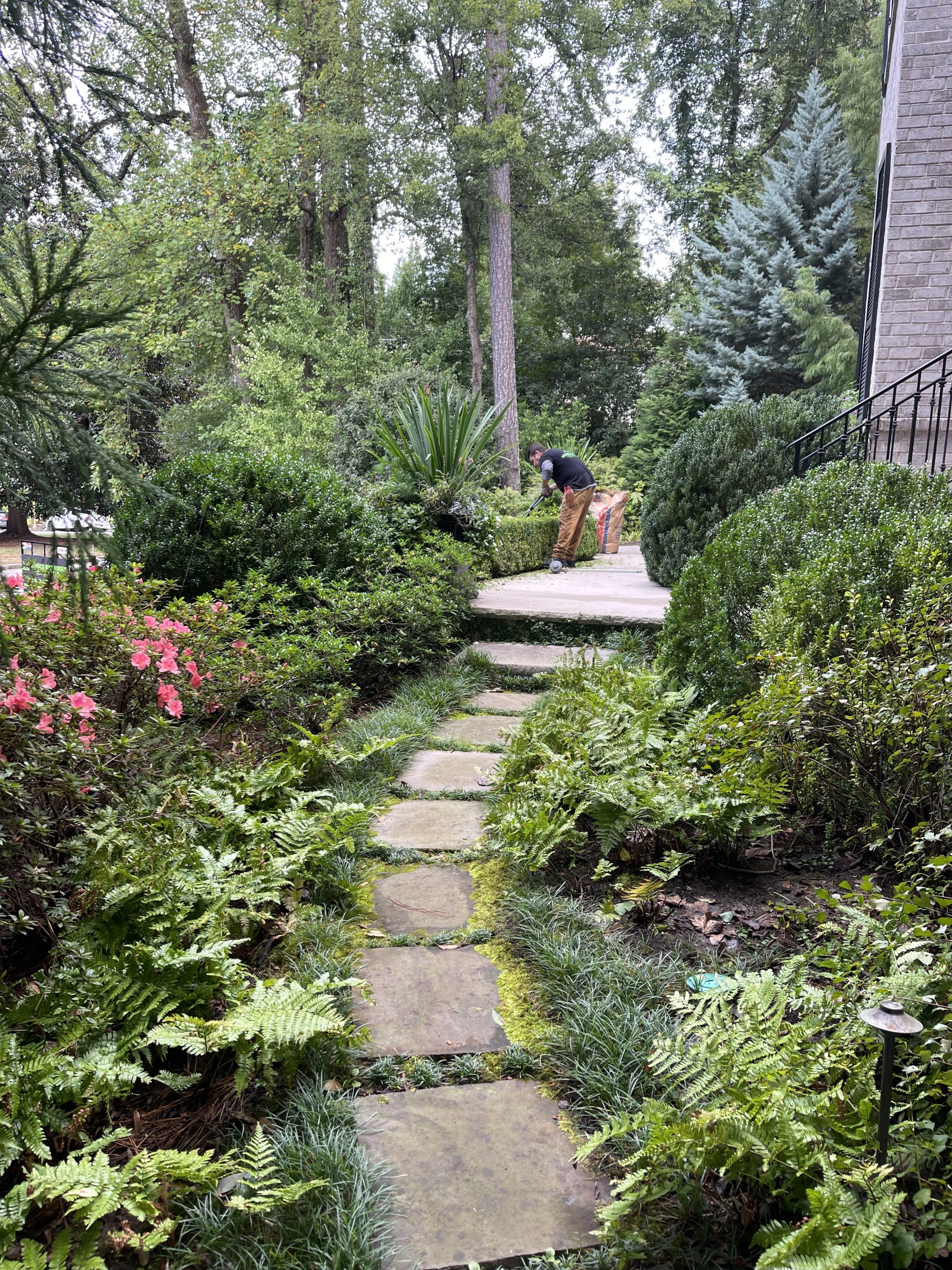
Metro Atlanta’s established neighborhoods often have a split-site problem: sunny sections may support bermuda or zoysia, while shaded edges under mature trees need a different approach. A single material choice across the whole yard often underperforms in at least one zone. Plantings & Softscapes and Sod Installation work best when the plan accounts for each zone separately.
The Correct Installation Sequence
The order of operations on a landscape installation project matters as much as the materials chosen. Here is the sequence that prevents the most common failure points on intown Atlanta lots:
- Site evaluation: Assess sun exposure by zone, slope direction, drainage patterns, and existing root zones before any planning is finalized.
- Utility locate: Georgia 811 covers homeowners and contractors doing landscaping, grading, or tree planting. Requests should be made at least three business days before any mechanized digging begins.
- Tree and permit review: Confirm whether the project requires an arborist meeting, removal permit, or Tree Conservation Plan based on the applicable municipality.
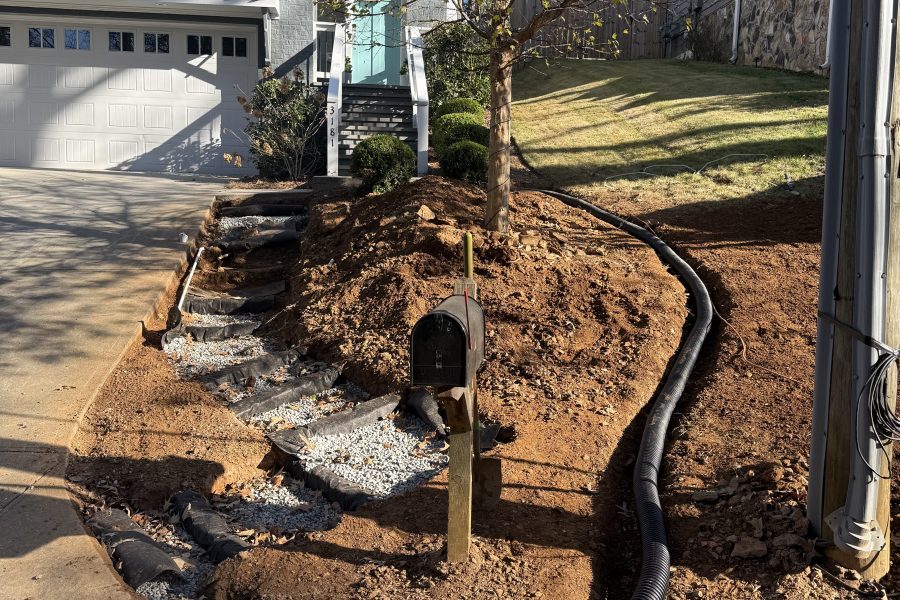
- Rough grading and drainage correction: Water management infrastructure and grading corrections should happen before any sod, planting, or mulch is installed. Installing over an unresolved drainage problem is one of the most reliable ways to waste a landscape investment.
- Irrigation planning: New sod requires water within 30 minutes of installation, according to UGA establishment guidance. Irrigation Installation or adjustments to existing zones should be confirmed ready before sod delivery.
- Soil testing: Many Georgia soils test acidic, often around pH 4 to 5. Turf generally performs better closer to pH 6 to 7, so pH correction before installation can matter as much as the grass variety selected.
- Finish installation: Plants, sod, Mulch & Pine Straw Installation, and final detail work come last, after all structural and invisible work is complete.
Drainage and Soil Prep: The Details That Change Outcomes
Georgia red clay is dense, slow-draining, and prone to compaction. It is also frequently mishandled during landscape installation. Adding sand to clay soil is a common mistake that UGA Extension specifically cautions against, because the combination can create a concrete-like structure instead of improving drainage. The correct approach is to address compaction and rough grading first, then amend appropriately based on a soil test rather than trying to loosen clay with the wrong amendment.
Drainage correction should precede sod and planting. Standing water under new sod causes root suffocation and turf loss. Drainage issues under planting beds cause root rot and decline that looks like a plant health problem but is actually a site problem. On lots in Sandy Springs and Brookhaven where slopes are common, Yard Drainage & Grading work is often a prerequisite for anything installed afterward to establish well.
Timing, Cost Drivers, and What to Ask Before Approving a Plan
Sod timing has real consequences in Georgia’s climate. Late-season zoysia and centipedegrass sod installations carry higher winter injury risk than bermudagrass installed at the same time, according to UGA guidance on winter turfgrass establishment. If a project is scheduled near dormancy, the grass type selected affects the risk profile of the install.
Cost on intown installation projects rises when scope includes tree-compliance steps, grading corrections, drainage infrastructure, irrigation additions, or restricted-access labor. Narrow side yards, protected root zones, and slopes can all prevent the use of larger equipment, adding time to tasks that would be straightforward on an open lot. Understanding scope variables upfront is the only way to budget accurately for a project in these neighborhoods.
Before approving any installation plan, it’s worth asking these five questions:
- How will drainage be handled before finish materials go in?
- What tree permits or arborist approvals apply to this site?
- Is the lawn material matched to actual sun exposure in each zone?
- When will utility marking be completed through Georgia 811?
- What watering plan starts the day of sod or planting installation?
A plan that answers all five clearly is a plan built around how these properties actually behave, not just how they look in a rendering.
Schedule Your Landscape Installation Consultation Today
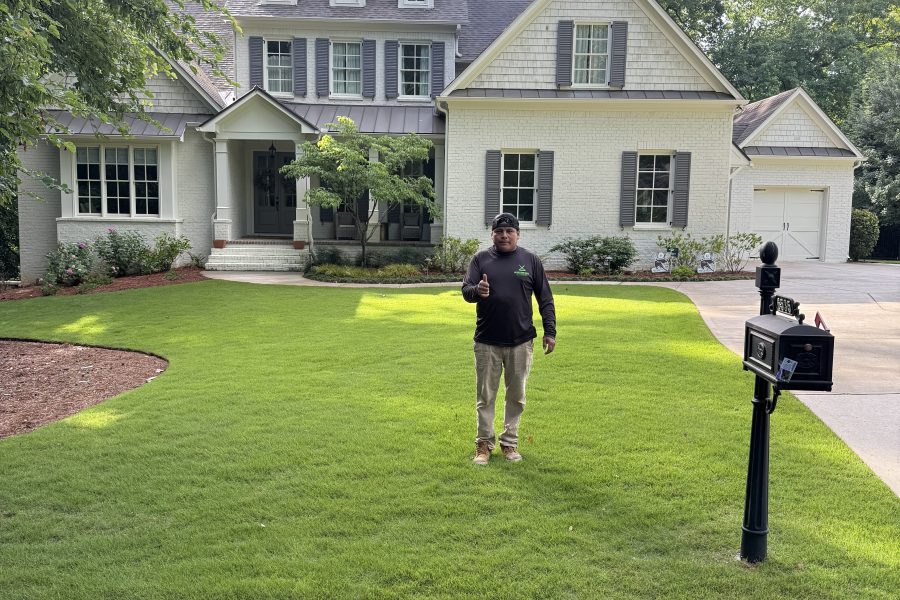
Hedges and Edges works with homeowners throughout Buckhead, Brookhaven, Sandy Springs, Chastain Park, Ansley Park, Midtown, Virginia Highlands, and surrounding Atlanta, GA communities. Our Enhancements services cover the full range of landscape installation work, from sod and planting beds to drainage correction and softscapes. If you’re planning a project and want a team that understands the site constraints specific to intown Atlanta lots, give us a call at (404) 747-6673 or reach out through our website to get started.